
- Brief Introduction to High-Voltage Ring Main Units
- 2015/11/26 DAYA Electric
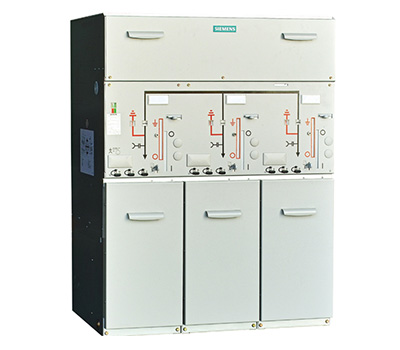
Brief Introduction to High-Voltage Ring Main Units (HV RMUs)
Although high-voltage ring main units (HV RMUs) have not been around for a long time, they have been widely used in recent years. This is mainly because most of the buildings of newly developed industrial enterprises and public institutions have medium and small power supply and distribution capacities from the perspective of power supply and distribution—their distribution transformers are generally no more than 1250 KVA, requiring long-term stable power supply and infrequent operation of high-voltage switches.For such users, although the performance of HV RMUs is not the most perfect, it is sufficient and competent. With large-scale urban construction, a large number of large high-rise buildings have sprung up, and power transformation and distribution stations are often located downstairs. According to fire protection requirements, power transformation and distribution equipment must be "oil-free"; in terms of the rational use of construction area, such equipment should be "miniaturized". Thus, HV RMUs (or vacuum circuit breakers), dry-type transformers, and dry-type current transformers have been widely adopted in various buildings.HV RMUs feature a simple structure, reliable and safe operation, minimal maintenance, and low operating costs. Compared with switchgear equipped with circuit breakers, they have distinct advantages. RMUs require load switches with higher performance and smaller size, which has promoted the development of new types of load switches. In turn, this has driven the technological progress of RMUs. Today's HV RMUs not only have excellent performance but also form a complete product series, further expanding their scope of application.This article is compiled and edited by Daya Electric Group Co., Ltd. (//yardscreeksoaring.com/). Reproduction is permitted with proper attribution.- The Functions and Working Principles of Ring Main UnitsInspecting the Quality of High-Voltage Ring Main Units (HV RMUs)
中文版
Service Hotline:0577-67391666