
- Methods for Selecting Mechanical Parameters of Outdoor High-Voltage Vacuum Circuit Breakers (Part 3)
- 2015/11/12 DAYA Electric
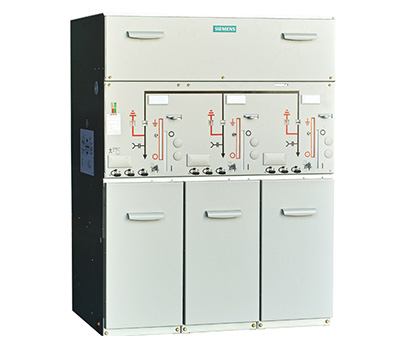
Methods for Selecting Mechanical Parameters of Outdoor High-Voltage Vacuum Circuit Breakers (Part 3)
Currently, vacuum switches have been widely used in various fields at home and abroad. With the popularization and improvement of vacuum switch applications, users are increasingly in need of understanding and mastering knowledge about the principles, structure, usage, and maintenance of vacuum switches. Combining practical experience, this article theoretically analyzes the selection principles and empirical data of mechanical parameters for outdoor high-voltage vacuum circuit breakers, providing technical references for users to better utilize vacuum switches.
1. Closing Speed
Due to the high static voltage withstand level of vacuum interrupters at the rated opening distance, the closing speed of outdoor high-voltage vacuum circuit breakers is significantly lower than the opening speed. To minimize electrical wear of contacts caused by pre-breakdown during the closing process and avoid contact welding, a certain closing speed is necessary. However, an excessively high closing speed not only increases the closing work of the operating mechanism but also intensifies the closing impact on the interrupter, greatly reducing its service life. Under normal circumstances, the closing speed of 10kV-class outdoor high-voltage vacuum circuit breakers is 0.4-0.7 m/s, and can be 0.8-1.2 m/s if necessary.
2. Contact Closing Bounce Time
The contact closing bounce time of outdoor high-voltage vacuum circuit breakers is an important indicator to measure their performance. It is related to the contact bounce pressure, closing speed, opening distance, and contact material of the vacuum interrupter, as well as the structure of the interrupter, the structure of the circuit breaker, and installation and commissioning. The shorter the contact closing bounce time, the better the performance; the longer the bounce time, the more severe the electrical wear of the contacts, which is prone to generating closing overvoltage. When closing short-circuit currents or capacitors, as well as during dynamic and thermal stability tests, it will lead to contact welding. In addition, the longer the contact closing bounce time, the more seriously it endangers the service life of the bellows of the interrupter. For 10kV-class outdoor high-voltage vacuum circuit breakers with copper-chromium contact materials, the closing bounce time shall not exceed 2ms; for those with other contact materials, the closing bounce time can be relatively longer but shall not exceed 5ms.
3. Three-Pole Synchronization
The three-pole synchronization of outdoor high-voltage vacuum circuit breakers refers to the degree to which the three poles do not close or separate simultaneously. Since the opening and closing synchronization is relative and the numerical differences are not significant, only the three-pole closing synchronization is generally assessed. Circuit breakers with poor three-pole synchronization will seriously affect the breaking capacity of the switch and are prone to excessive arcing time. Due to the fast opening and closing speed and small opening distance of the circuit breaker, it is not difficult to meet the parameter requirements through accurate commissioning. Generally, the closing synchronization is specified to not exceed 1ms.
This article is compiled and edited by Daya Electric Group Co., Ltd. (//yardscreeksoaring.com/). Reproduction is permitted with proper attribution.
- Description and Characteristics of Solid-Insulated Ring Main Units (RMUs)Methods for Selecting Mechanical Parameters of Outdoor High-Voltage Vacuum Circuit Breakers (Part 2)
中文版
Service Hotline:0577-67391666